
Plan renovation debris before demolition starts
Identify risky materials first, estimate the debris by material type, and decide where each load will go. A pile should not be the first time you think about disposal.
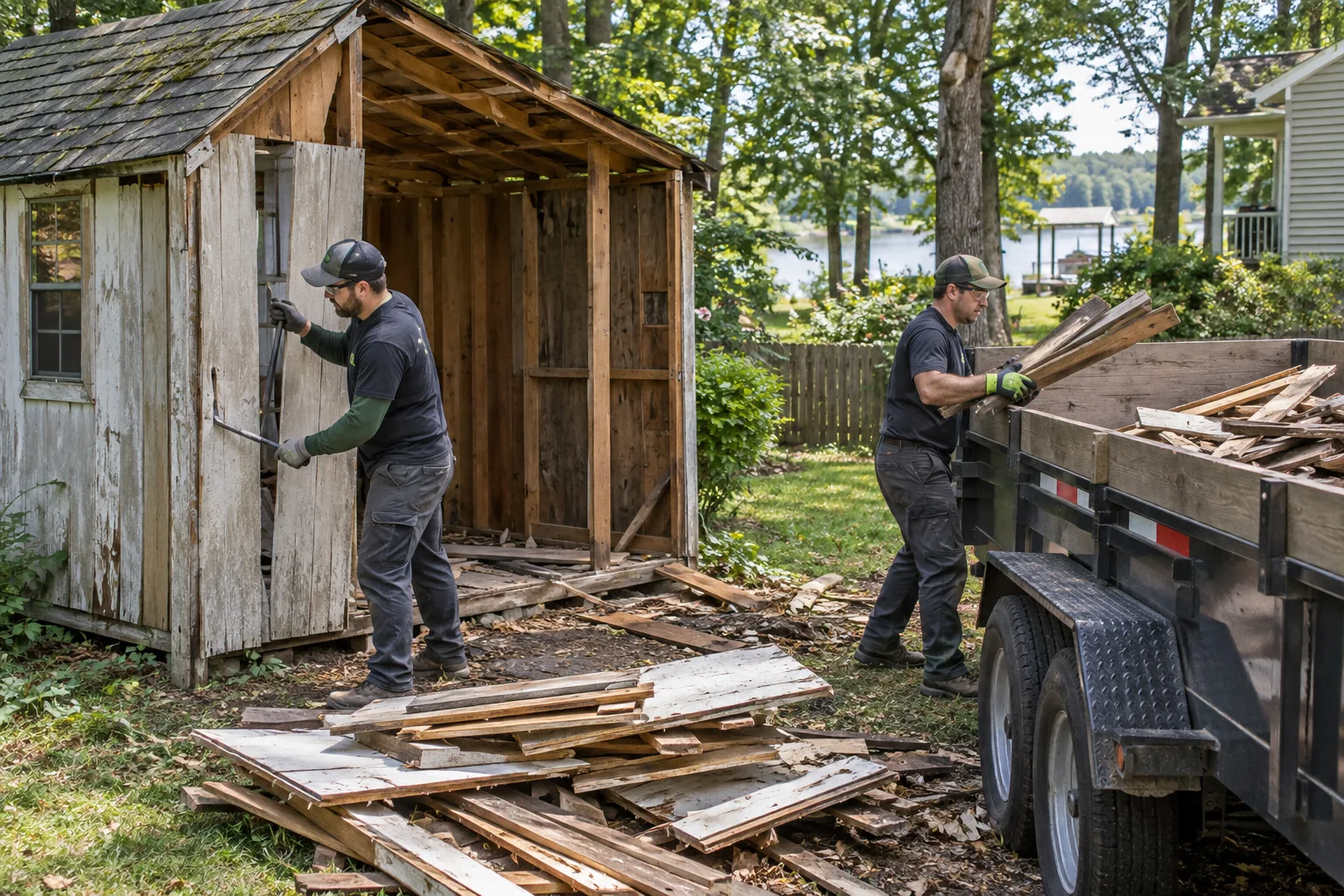
Start with age and material
Older buildings can contain lead-based paint or asbestos-containing material. EPA guidance says pre-1978 housing may contain lead-based paint, and disturbing it can create lead dust. Renovation contractors working in covered pre-1978 homes must follow lead-safe requirements. EPA lead and demolition guidance (retrieved September 22, 2026; United States).
If you suspect asbestos, lead, mercury devices, refrigerants, fuel, or unknown chemicals, pause and get qualified guidance before demolition or hauling. Do not bury those items under ordinary lumber and drywall.
Build a simple debris plan
| Material | Plan before work |
|---|---|
| Clean wood and cabinets | Decide whether anything is reusable; remove hardware that creates handling hazards. |
| Drywall and flooring | Keep dry when possible and estimate weight, not only volume. |
| Concrete, brick, pavers | Use a dedicated heavy-material plan because a small volume can weigh a great deal. |
| Metal | Separate sharp edges and consider recycling routes. |
| Appliances or HVAC | Arrange utility disconnection and refrigerant handling before removal. |
Keep the loading route usable
Choose a staging area that does not block workers, doors, drainage, or emergency access. Protect finished floors. Keep nails and sharp offcuts contained. Plan how the truck or trailer will enter and leave without crossing soft ground or damaging landscaping.
Ask a hauler these questions
- Which construction materials do you accept?
- Are weight-based or special disposal fees possible?
- What must be separated?
- Can the crew load from inside, or should debris be staged?
- What materials require another specialist?
Chesapeake city bulk service does not collect construction or demolition debris. Review the current city rule before placing material at the curb.
See construction debris removal or plan the hauling step with EcoClear.